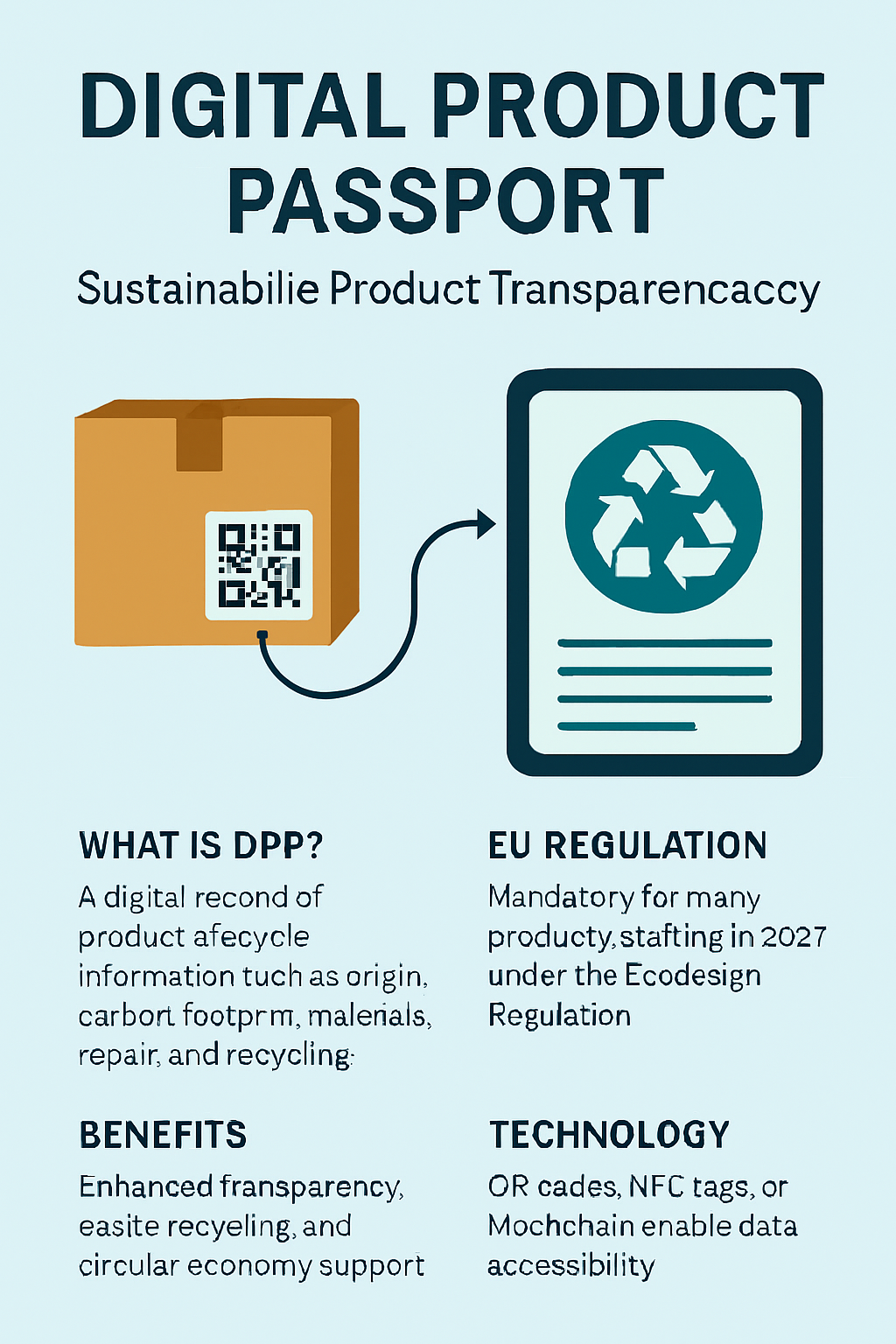
As the world accelerates toward sustainability, transparency in product lifecycles is no longer optional—it’s essential. Enter the Digital Product Passport (DPP), a groundbreaking initiative by the European Union designed to revolutionize how we track, understand, and manage the environmental impact of physical goods. From batteries to textiles, electronics to construction materials, DPP is set to become the new standard in product data transparency.
In this blog post, we’ll explore what DPP is, why it’s trending, how it works, and what it means for manufacturers, retailers, and consumers alike.
🔍 What Is a Digital Product Passport?
A Digital Product Passport is a structured digital record that contains detailed information about a product’s origin, composition, environmental footprint, repairability, and recyclability. Think of it as a digital ID card for physical goods—accessible via QR codes, NFC tags, or blockchain-based platforms.
Key Features:
- Material composition
- Carbon footprint data
- Repair and reuse instructions
- End-of-life recycling guidelines
- Supply chain traceability
The goal? To enable a circular economy where products are reused, repaired, and recycled instead of discarded.
📈 Why Is DPP Trending?
1. EU Green Deal & Ecodesign Regulation
The European Union’s Green Deal aims for net-zero emissions by 2050. As part of this, the Ecodesign for Sustainable Products Regulation (ESPR) mandates DPP implementation across key industries. This regulation is already reshaping how companies design, manufacture, and distribute products.
2. Consumer Demand for Transparency
Modern consumers want to know more than just price and brand—they want to know how a product was made, what it’s made of, and how it affects the planet. DPP delivers that transparency in a standardized, accessible format.
3. Supply Chain Accountability
With global supply chains under scrutiny, DPP helps companies prove ethical sourcing, reduce greenwashing, and comply with sustainability regulations.
🗓️ DPP Rollout Timeline by Product Category
| Year | Product Category | Regulation Status |
|---|---|---|
| 2026 | Batteries | Mandatory |
| 2027 | Textiles | Mandatory |
| 2028 | Electronics | Mandatory |
| 2029 | Furniture & Construction | Mandatory |
| 2030 | All Physical Products | Expected |
By 2030, nearly every physical product sold in the EU will require a Digital Product Passport.
🌍 Benefits of Digital Product Passport
For Consumers:
- Informed choices: Know what you’re buying and its environmental impact.
- Repair guidance: Extend product life with easy access to repair instructions.
- Recycling support: Understand how to dispose of products responsibly.
For Manufacturers:
- Regulatory compliance: Meet EU sustainability standards.
- Brand trust: Build credibility through transparency.
- Data insights: Track product performance and lifecycle metrics.
For Retailers:
- Product differentiation: Highlight eco-friendly products.
- Customer engagement: Offer value-added services like repair kits or recycling programs.
🔗 How Does DPP Work?
Digital Product Passports are typically accessed via:
- QR codes printed on packaging or product labels
- NFC chips embedded in products
- Blockchain platforms for secure, tamper-proof data storage
The data is standardized across industries and stored in interoperable formats, allowing easy access by consumers, regulators, and supply chain partners.
🧠 Technologies Powering DPP
1. Blockchain
Ensures data integrity and traceability across the product lifecycle.
2. IoT Sensors
Track real-time usage, wear, and environmental conditions.
3. AI & Machine Learning
Analyze lifecycle data to optimize product design and sustainability.
⚠️ Challenges Ahead
While DPP offers immense potential, it’s not without hurdles:
- Data standardization: Different industries must agree on common formats.
- Privacy concerns: Balancing transparency with proprietary data protection.
- Cost of implementation: Small businesses may struggle with tech adoption.
- Global alignment: Non-EU countries may lag behind in regulation.
📊 Case Studies & Early Adopters
Apple
Already provides detailed environmental reports for its products, paving the way for DPP integration.
IKEA
Investing in circular design and digital tracking of furniture components.
Adidas
Exploring DPP for textile traceability and recycling.
📣 Final Thoughts
The Digital Product Passport isn’t just a regulatory requirement—it’s a transformative tool for sustainability, transparency, and innovation. As the EU leads the way, businesses worldwide must prepare for a future where every product tells its story, digitally.
Whether you’re a manufacturer, retailer, or conscious consumer, DPP is your gateway to smarter, greener choices.