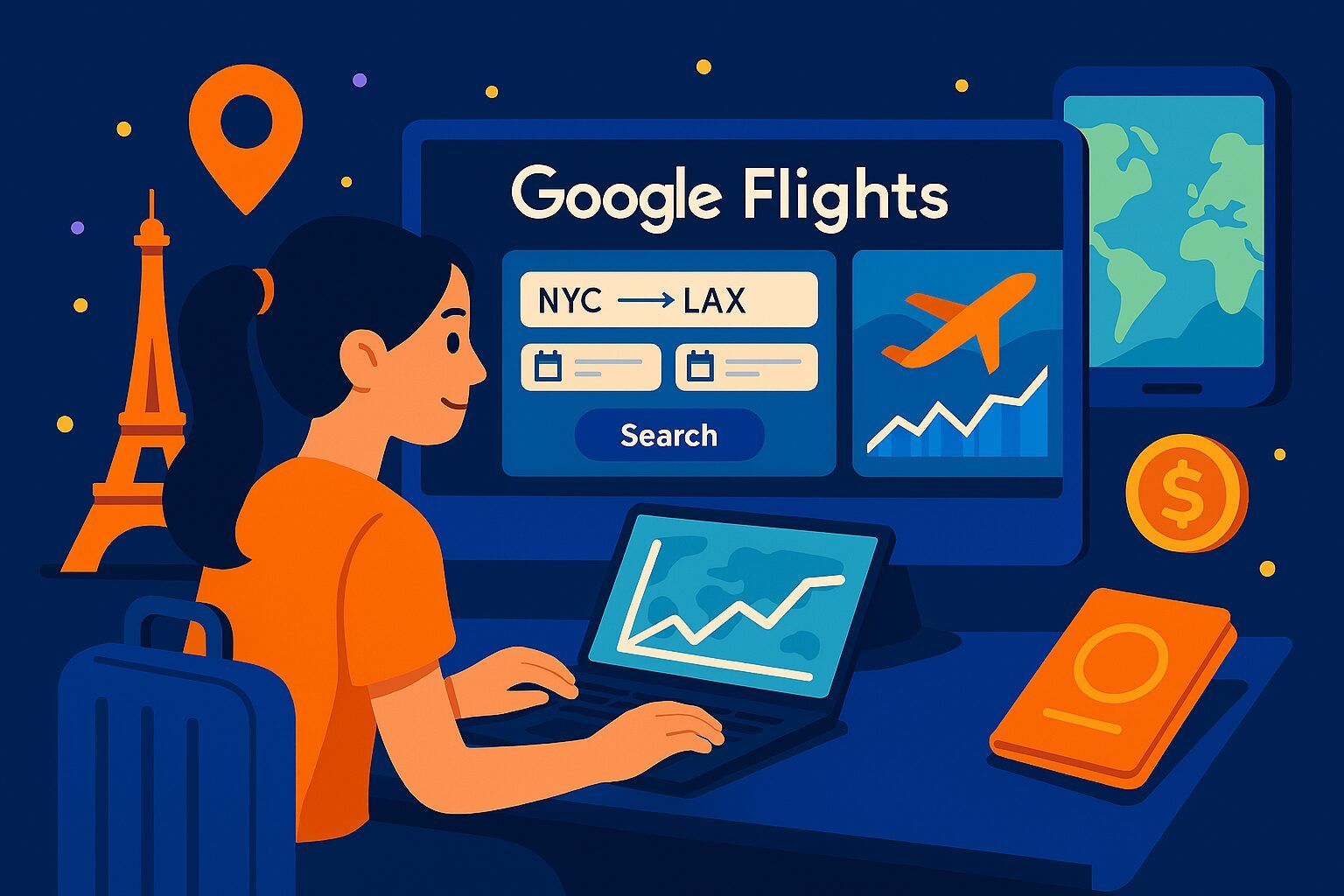
It’s not just about booking flights anymore. Google Flights has quietly evolved into one of the most influential travel planning tools in the U.S., guiding millions of users through price predictions, destination discovery, and itinerary strategy. As Gen Z and millennial travelers shift toward data-driven decisions, Google Flights is becoming the backbone of modern trip planning—and a blueprint for how digital platforms can shape behavior.
🧭 The New Role of Google Flights in Travel Behavior
Google Flights started as a simple fare comparison tool. Today, it’s a full-fledged travel assistant. Users can:
- Track prices over time
- Discover trending destinations
- Get AI-powered booking advice
- Compare flexible date options
- Explore maps based on budget and season
It’s not just a search engine—it’s a decision engine.
📈 Why It’s Trending
According to Google’s own data, searches for “best time to book flights” hit an all-time high this year. Travelers are no longer passive—they’re strategic. And Google Flights is meeting that demand with:
- Historical price insights
- Dynamic booking windows
- Explore map with budget filters
- AI-powered deal predictions
This shift reflects a broader trend: travel planning is now a data game.
🧠 How It’s Changing User Psychology
Google Flights doesn’t just show prices—it teaches users how to think like analysts. The platform encourages:
- Delayed gratification: Waiting for price drops
- Scenario planning: Comparing multiple departure dates
- Geo-flexibility: Choosing destinations based on cost, not preference
- Behavioral nudges: “Prices are likely to rise soon” prompts
It’s behavioral economics in action—wrapped in a travel interface.
🧳 The Rise of “Search-First” Travel Planning
Before booking, users now:
- Search “cheapest time to fly to [destination]”
- Use Google Flights to compare 3–5 date ranges
- Set alerts for price drops
- Explore alternative airports and routes
- Cross-check with hotel prices and visa requirements
This “search-first” behavior is replacing traditional travel agency models.
🛠️ Tools That Make Google Flights Powerful
| Feature | Functionality |
|---|---|
| Price Graph | Shows fare trends over time |
| Explore Map | Visualizes destinations by budget |
| Price Alerts | Notifies users of drops or spikes |
| Booking Insights | Predicts cheapest booking windows |
| Multi-city Search | Supports complex itineraries |
| Filters (bags, stops, etc.) | Tailors results to user preferences |
These tools turn casual browsers into informed travelers.
🔍 What Content Creators Can Learn
Google Flights isn’t just a travel tool—it’s a content model. Creators can apply its principles to their own platforms:
- Predictive UX: Help users anticipate outcomes
- Visual exploration: Use maps, sliders, and dynamic filters
- Behavioral nudges: Guide decisions with smart prompts
- Data transparency: Show trends, not just results
- Modular design: Let users build their own experience
Whether you’re building a blog, app, or product—Google Flights is a masterclass in user-centric design.
🧩 Who Uses Google Flights—and Why
| User Type | Behavior Shift |
|---|---|
| Gen Z travelers | Use Explore Map to find budget destinations |
| Digital nomads | Track multi-city routes and visa windows |
| Families | Compare school break dates for savings |
| Solo travelers | Prioritize flexibility and price alerts |
| Business flyers | Use filters for nonstop, refundable fares |
It’s not one-size-fits-all—it’s modular, adaptive, and scalable.
⚠️ Common Misconceptions
- “Google Flights sells tickets”—No, it redirects to airlines or OTAs
- “Prices are always accurate”—They fluctuate rapidly
- “Explore Map is only for vacations”—It’s great for relocation, remote work, and visa planning
- “It’s only for domestic travel”—International insights are robust and improving
Understanding the tool’s scope is key to using it effectively.
🧠 Final Thoughts
Google Flights is more than a booking tool—it’s a behavioral platform. It teaches users to think strategically, plan flexibly, and act with data. For content creators, it’s a blueprint for building trust, utility, and engagement.
If you want to understand how digital platforms shape real-world decisions, start with Google Flights. It’s not just changing how we travel—it’s changing how we think.