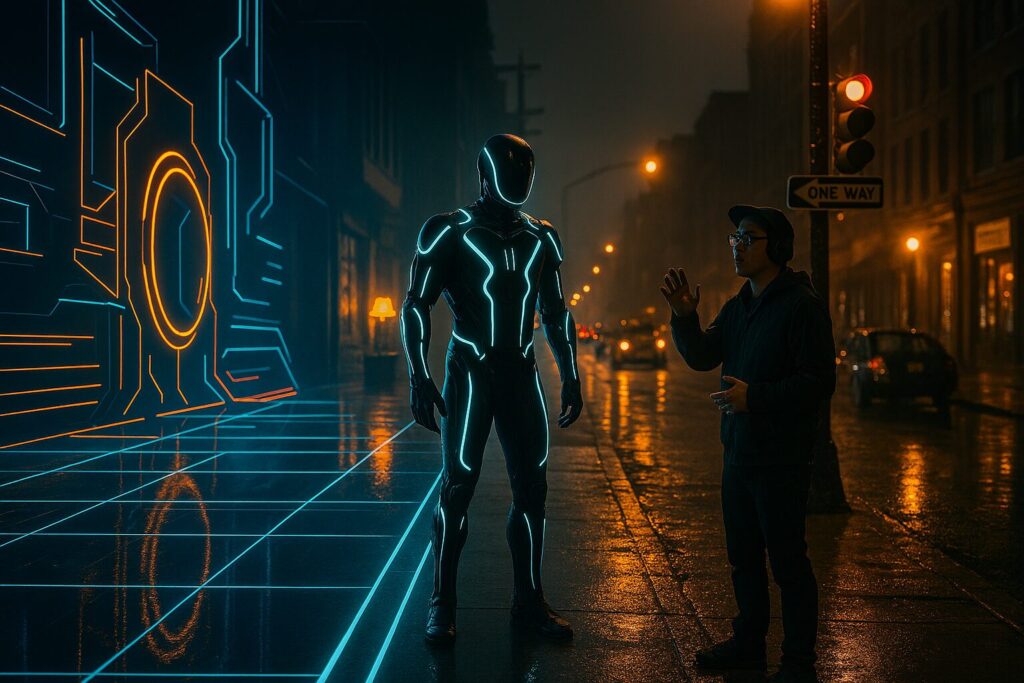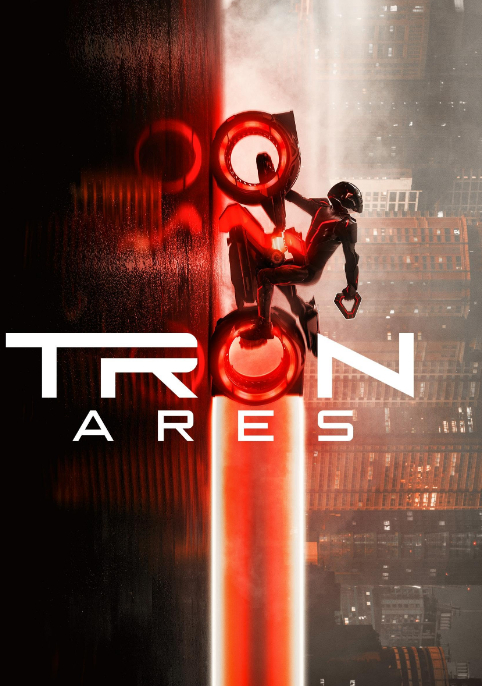
A pulse of neon. The hum of circuitry. A figure emerging from the grid into the streets of the real world. TRON: Ares isn’t just another chapter in the cult sci-fi saga—it’s the boldest expansion of its mythology yet. Without leaning on nostalgia alone, it bridges the gap between the sleek, impossible landscapes of the digital realm and the messy, unpredictable nature of human life.
A Story That Crosses the Divide
At its core, TRON: Ares is about first contact—only this time, the “alien” is an AI-born program. The premise is deceptively simple: a highly sophisticated entity named Ares is sent from the Grid into the physical world on a mission that could redefine the relationship between humans and artificial intelligence.
The film avoids heavy exposition, letting the audience discover the rules of this new reality alongside its characters. It’s a narrative choice that keeps the pacing taut and the stakes personal.
Visual Language: From Neon to Natural Light
The TRON universe has always been defined by its iconic visual style—glowing lines, stark contrasts, and geometric perfection. Ares plays with that legacy by juxtaposing the hyper-stylized Grid with the imperfections of the real world.
Scenes in the digital realm are crisp, symmetrical, and bathed in electric blues and oranges. In contrast, the real-world sequences embrace natural light, textured surfaces, and asymmetry. This visual shift reinforces the film’s central theme: perfection meeting chaos.
Casting That Grounds the Spectacle
The cast delivers performances that make the high-concept premise feel grounded. The actor portraying Ares balances mechanical precision with flashes of curiosity and vulnerability, making the character more than just a visual effect. The human leads—scientists, engineers, and everyday citizens—react with a believable mix of awe, fear, and skepticism.
Their chemistry ensures that the story remains character-driven, even when surrounded by dazzling effects.
Sound Design: The Heartbeat of the Grid
TRON films have always been as much about sound as visuals, and Ares continues that tradition. The score blends pulsing synths with orchestral swells, creating a sonic bridge between the digital and physical worlds.
Subtle audio cues—like the faint hum of circuitry under Ares’ voice or the glitch-like distortion during moments of stress—add layers of immersion without distracting from the dialogue.
Action With Purpose
The action sequences are kinetic but never gratuitous. Chase scenes through both the Grid and city streets are choreographed to highlight the differences between the two environments. In the Grid, movement is fluid and almost balletic; in the real world, it’s raw, unpredictable, and bound by physics.
Each set piece advances the plot, revealing new facets of Ares’ abilities and limitations.
Themes That Resonate
Beneath the spectacle, TRON: Ares asks timely questions:
- What happens when artificial intelligence develops a sense of self?
- Can two fundamentally different worlds coexist without one dominating the other?
- Is perfection worth preserving if it means sacrificing unpredictability?
These questions linger long after the credits roll, giving the film a weight that extends beyond its runtime.
Final Takeaway
TRON: Ares is more than a visual feast—it’s a thoughtful exploration of identity, connection, and the boundaries between creator and creation. It honors the legacy of the franchise while pushing it into uncharted territory, proving that the Grid still has stories worth telling.
IMDB Tron: Ares
https://www.imdb.com/title/tt6604188