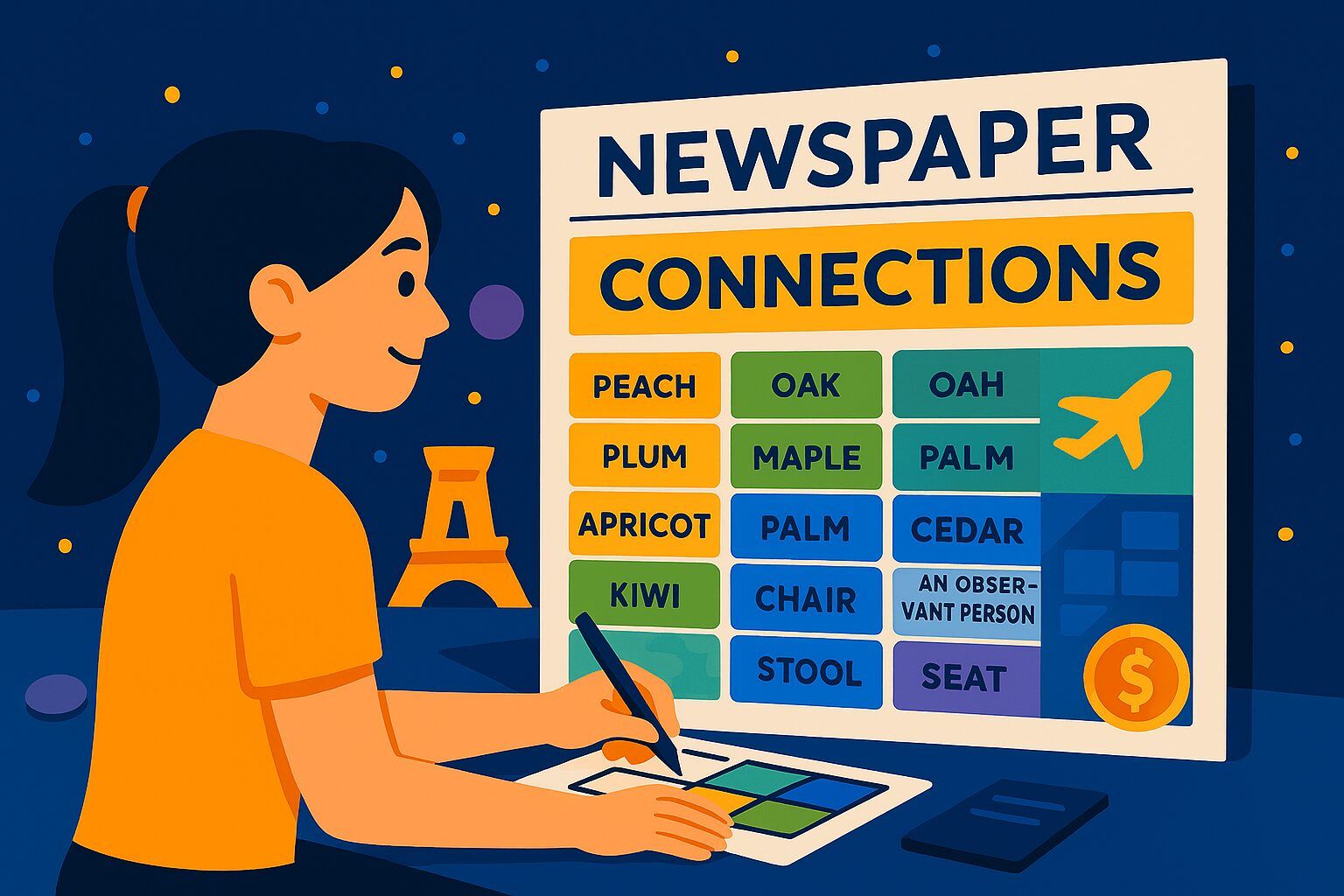
It’s not flashy. It’s not fast. And yet, it’s everywhere. “Connections,” the New York Times’ latest word game, has quietly become a daily ritual for millions of players. With over 13 million monthly searches and a growing presence on TikTok and Reddit, this micro-puzzle is redefining how Gen Z and millennials engage with logic, language, and dopamine. But what makes it so addictive—and what can creators learn from its rise?
🧠 What Is ‘Connections’—And Why Does It Matter?
Launched by the New York Times Games team and puzzle editor Wyna Liu, “Connections” challenges players to group 16 words into four sets of four, each linked by a hidden theme. The themes range from pop culture and geography to grammar and abstract concepts. Players get four mistakes before the game ends, and each puzzle resets daily.
It’s deceptively simple. But beneath the surface, it’s a masterclass in cognitive engagement.
🧩 The Mechanics of Micro-Zeka
“Connections” belongs to a rising genre of micro-intelligence games—short, focused puzzles that stimulate pattern recognition, lateral thinking, and semantic memory. Unlike traditional brain games, these puzzles:
- Require minimal time commitment
- Offer instant feedback
- Encourage social sharing
- Reset daily to build habit loops
It’s not about winning—it’s about solving. And that distinction is key.
🎯 Why Gen Z Loves It
Gen Z grew up with fast feedback, algorithmic content, and gamified learning. “Connections” fits perfectly into their digital rhythm:
- Short-form challenge: Solvable in under 5 minutes
- Social proof: Shareable results with color-coded grids
- Emotional reward: Satisfaction from “getting the theme”
- Low friction: No login, no ads, no distractions
It’s the Wordle effect—refined for a new generation.
🧠 The Psychology Behind the Hook
“Connections” activates several cognitive and emotional triggers:
| Trigger | Effect |
|---|---|
| Pattern recognition | Dopamine release from solving word sets |
| Scarcity (1/day) | Builds anticipation and habit |
| Color-coded feedback | Visual reinforcement of success/failure |
| Social comparison | Drives sharing and replay |
| Semantic tension | Forces deeper thinking across categories |
It’s not just a game—it’s a brain ritual.
📈 How It Went Viral
- TikTok clips: Users share their solving process, reactions, and streaks
- Reddit threads: Daily discussions on r/ConnectionsNYT
- YouTube explainers: Puzzle breakdowns and strategy guides
- NYT integration: Promoted alongside Wordle, Spelling Bee, and The Mini
- Color grid culture: Yellow, green, blue, purple results now signal identity
The game’s design encourages virality without needing flashy graphics or multiplayer modes.
🛠️ What Creators Can Learn
“Connections” offers a blueprint for building addictive, meaningful content:
- Micro-format mastery: Short, repeatable formats win attention
- Semantic depth: Challenge users with layered meaning
- Visual feedback: Use color, shape, and progression to reinforce behavior
- Social scaffolding: Make sharing part of the experience
- Daily rhythm: Build content that resets and rewards consistency
Whether you’re designing games, blogs, or apps—these mechanics apply.
🧩 The Rise of Micro-Brain Games
“Connections” is part of a larger movement:
- Wordle: Daily word guessing
- Spelling Bee: Vocabulary expansion
- Strands (NYT): Hidden word discovery
- Pips: Logic-based sorting
- Mini Crossword: Fast-format trivia
These games aren’t just entertainment—they’re cognitive workouts.
⚠️ Common Misconceptions
- “It’s just a word game”—No, it’s a semantic puzzle
- “It’s easy”—Difficulty ramps up with abstract themes
- “It’s for nerds”—TikTok proves it’s mainstream
- “It’s repetitive”—Themes change daily, keeping it fresh
Underestimating micro-games means missing their cultural impact.
🧠 Final Thoughts
“Connections” isn’t loud, flashy, or competitive. But it’s quietly reshaping how millions engage with language, logic, and learning. For content creators, it’s a reminder: simplicity, depth, and habit can outperform complexity.
In a world of endless scroll, sometimes the smartest move is a 16-word puzzle.