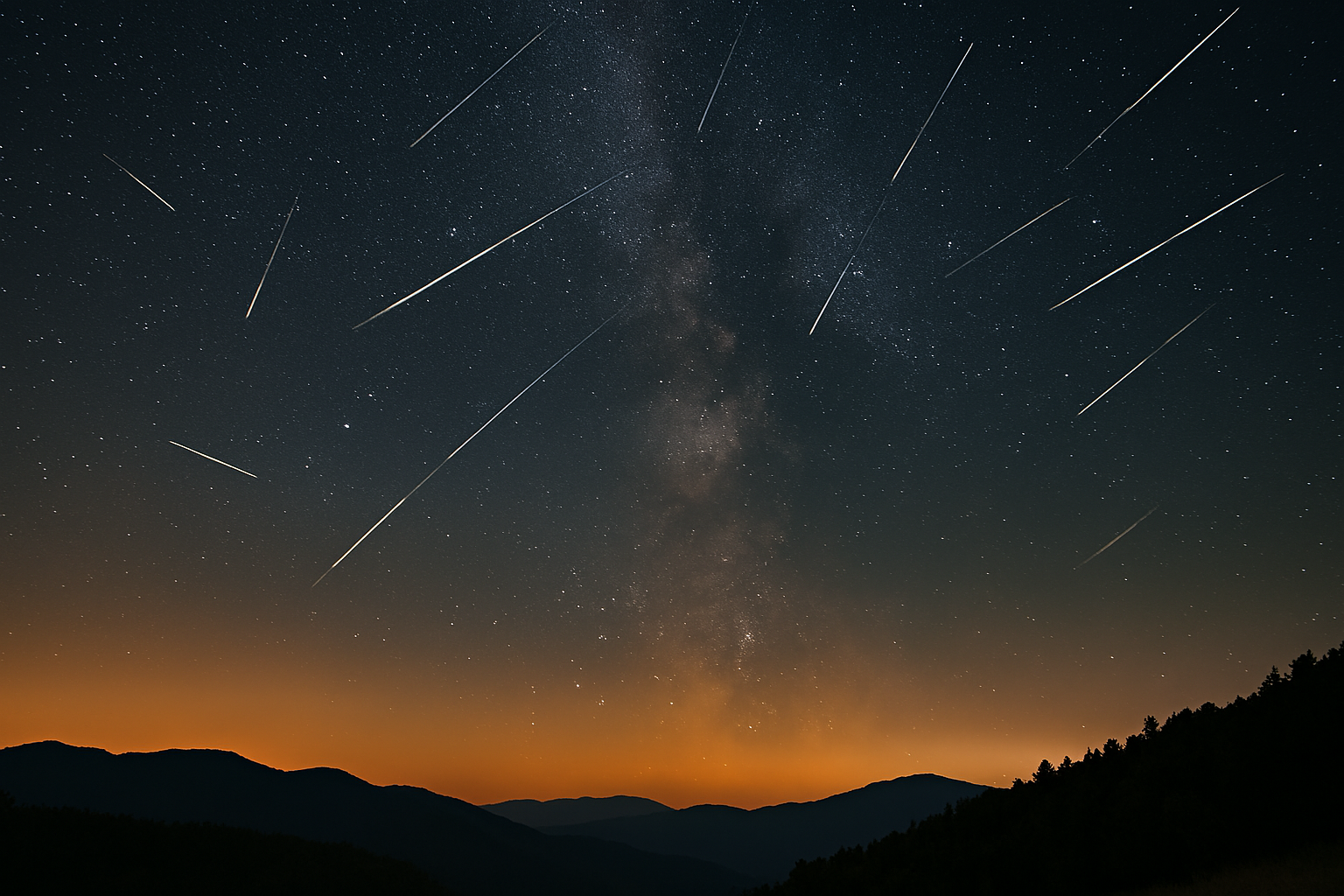
Every summer, the night sky puts on one of its most dazzling performances: the Perseid meteor shower. Known for its bright fireballs and frequent streaks, the Perseids are a favorite among amateur stargazers and seasoned astronomers alike. But what makes this celestial event so special—and how can you experience it at its best? This guide breaks down everything you need to know to catch the Perseids in all their glory, year after year.
🌌 What Are the Perseids?
The Perseid meteor shower is an annual event that occurs when Earth passes through the debris trail left by Comet Swift-Tuttle, a massive comet with a 133-year orbit around the Sun. As tiny particles from the comet enter Earth’s atmosphere at speeds up to 133,000 mph (59 km/s), they burn up and create brilliant streaks of light—what we call meteors or “shooting stars.”
- Active Period: July 17 to August 24
- Peak Nights: Typically August 11–13
- Meteor Rate: Up to 100 meteors per hour under ideal conditions
The shower gets its name from the constellation Perseus, where the meteors appear to originate.
🕒 Best Time to Watch
Timing is everything when it comes to meteor showers. For the Perseids:
- Best Viewing Hours: Midnight to dawn
- Why Late Night? The radiant (Perseus) rises higher in the sky, increasing visibility
- Avoid Moonlight: A bright moon can wash out fainter meteors—check moon phase calendars before planning
Even if the moon is full, you can still catch the brightest fireballs. Just position yourself so the moon is blocked by a building, tree, or hill.
📍 Where to Watch
Location can make or break your meteor shower experience. Here’s how to choose the perfect spot:
- Dark Skies: Get far away from city lights—rural areas and designated dark sky parks are ideal
- Wide Horizon: Open fields or hilltops offer unobstructed views
- High Altitude: Mountains and elevated areas reduce atmospheric interference
Pro tip: Use apps like Dark Sky Finder or Light Pollution Map to scout locations.
🧭 How to Prepare
Meteor watching is simple, but a little prep goes a long way:
- Let Your Eyes Adjust: It takes 15–30 minutes for your eyes to fully adapt to darkness
- Bring Essentials: Blankets, reclining chairs, snacks, and warm clothes
- Avoid Screens: Blue light from phones and tablets can ruin night vision
- Stay Still: Meteors can appear anywhere, so lie back and scan the whole sky
📷 How to Photograph the Perseids
Want to capture the magic? Here’s a quick setup guide:
- Camera: DSLR or mirrorless with manual settings
- Lens: Wide-angle (14–35mm) with a fast aperture (f/2.8 or lower)
- Settings: ISO 1600–3200, shutter speed 10–30 seconds
- Tripod: Essential for long exposures
- Remote Shutter or Intervalometer: Prevents camera shake and allows continuous shooting
Bonus tip: Include foreground elements like trees or mountains for dramatic composition.
🧠 Fun Facts and Cosmic Origins
- Comet Swift-Tuttle is the largest known object to regularly cross Earth’s orbit—its nucleus is about 16 miles (26 km) wide
- The meteors are mostly the size of a grain of sand, yet they produce brilliant light due to their extreme speed
- The Perseids are sometimes called the “Tears of Saint Lawrence,” named after the martyr whose feast day coincides with the shower’s peak
🧪 Science Behind the Streaks
Let’s break down the terminology:
| Term | Meaning |
|---|---|
| Meteoroid | A small particle from a comet or asteroid in space |
| Meteor | The flash of light when a meteoroid burns in Earth’s atmosphere |
| Meteorite | A meteoroid that survives the atmosphere and lands on Earth (rare for Perseids) |
🌠 Tips for a Memorable Experience
- Go Early: Start watching around 10 p.m. to catch early meteors
- Stay Late: Peak activity is often just before dawn
- Be Patient: Meteors come in bursts—wait at least an hour for a good show
- Bring Friends: Stargazing is better with company (and snacks)
🧭 Bonus: How to Find Perseus
Use a stargazing app like SkyView or Star Walk to locate the constellation Perseus. It rises in the northeast and is your guide to spotting the radiant point of the shower.
🌍 Global Viewing Tips
While the Perseids are best viewed in the Northern Hemisphere, here are some tips for global observers:
- Southern Hemisphere: Meteors are visible but fewer—look low in the northern sky
- Urban Areas: Try rooftop viewing with minimal light pollution
- Cloudy Nights: Check forecasts and plan alternate dates within the active window
🧭 Final Checklist
Before heading out:
✅ Check weather and moon phase ✅ Pack warm clothes and bug spray ✅ Charge your camera and phone ✅ Download a stargazing app ✅ Set your alarm for midnight!