In a world saturated with noise, clutter, and overstimulation, minimalism offers a breath of fresh air. From Instagram grids to website layouts, minimalist visual trends are dominating the digital landscape—not just for their aesthetic appeal, but for their ability to communicate clearly, evoke emotion, and drive engagement.
This guide explores the principles behind minimalist design, why it works, and how creators can harness its power across platforms.
🧠 What Is Minimalist Visual Design?
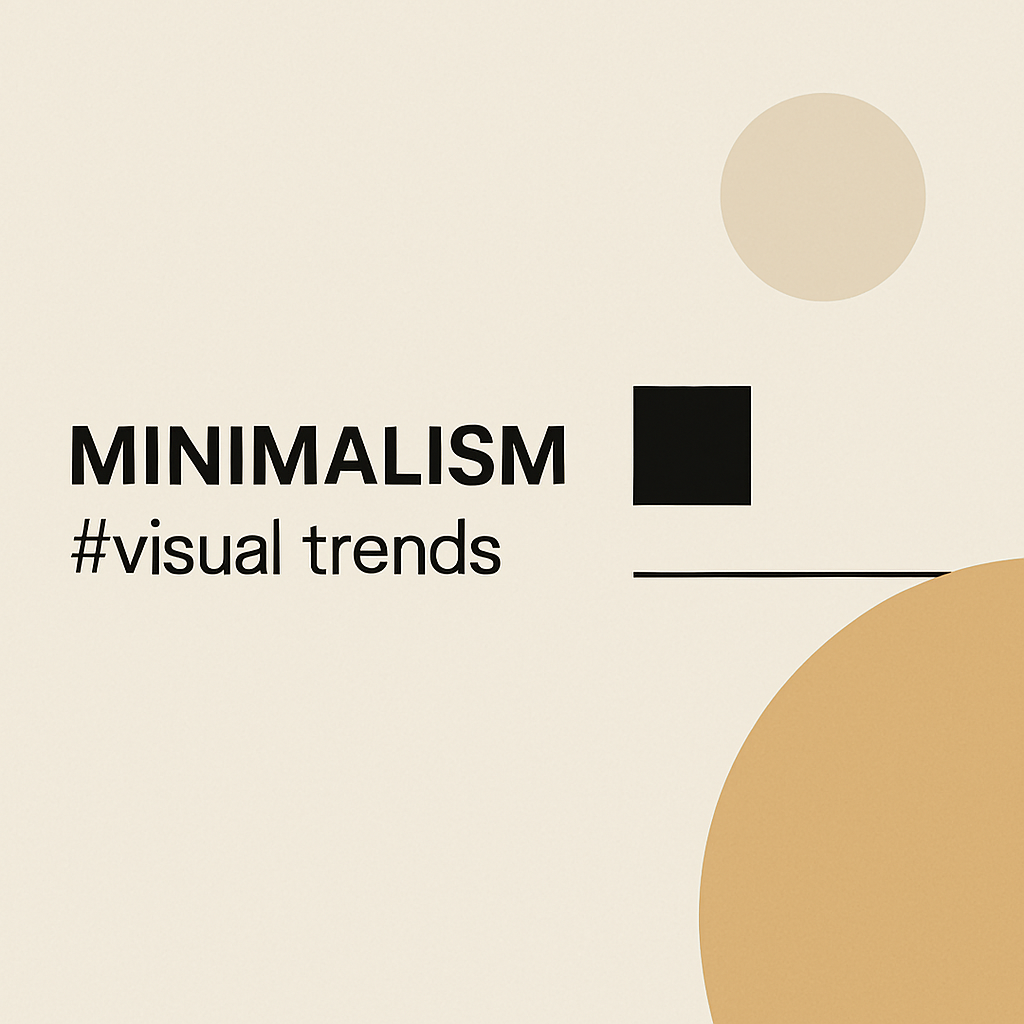
Minimalist design is the art of doing more with less. It strips away unnecessary elements to focus on clarity, function, and emotional resonance.
- Key Traits: Clean lines, ample white space, limited color palettes, and purposeful typography
- Goal: Enhance usability and storytelling by removing distractions
- Philosophy: “Less is more”—every element must serve a purpose
Minimalism isn’t about emptiness—it’s about intentionality.
📈 Why Minimalism Is Trending
Minimalist visuals are gaining traction for several reasons:
- Mobile-first consumption: Clean designs load faster and look better on small screens
- Short attention spans: Simplicity helps users process information quickly
- Brand differentiation: In a crowded feed, minimalism stands out
- Mental clarity: Users associate minimalism with calm, focus, and trust
It’s not just a style—it’s a strategic choice.
🧩 Core Elements of Minimalist Visuals
1. Whitespace
- Creates breathing room
- Guides the viewer’s eye
- Enhances readability and focus
2. Limited Color Palette
- Often 2–3 colors max
- Neutral tones dominate (black, white, beige, gray)
- Accent colors used sparingly for emphasis
3. Simple Typography
- Sans-serif fonts preferred
- Consistent sizing and spacing
- Hierarchy through weight, not decoration
4. Flat or Monochrome Icons
- Avoid gradients and shadows
- Use universally recognizable symbols
5. Geometric Shapes and Grids
- Structure without clutter
- Symmetry and alignment create harmony
🎯 Where Minimalism Works Best
Minimalist visuals thrive in:
- Social Media Posts: Especially on Instagram, Pinterest, and TikTok thumbnails
- Landing Pages: Clear CTAs and fast loading
- Product Packaging: Clean labels signal quality and sophistication
- Presentations: Focused slides improve retention
- Digital Products: Apps and dashboards with intuitive UX
Minimalism isn’t one-size-fits-all—but it’s surprisingly versatile.
💡 Tips for Creating Viral Minimalist Content
- Use contrast strategically: Light backgrounds with bold text or vice versa
- Focus on one idea per visual: Don’t dilute the message
- Leverage negative space: Let silence speak
- Test readability: If it’s not instantly clear, simplify
- Use motion sparingly: Subtle animations can enhance without overwhelming
Remember: simplicity is powerful when it’s intentional.
🧠 Psychology Behind Minimalism
Minimalist visuals tap into cognitive and emotional responses:
| Principle | Impact |
|---|---|
| Cognitive Load Theory | Reduces mental effort, improves comprehension |
| Gestalt Principles | Helps users group and interpret elements |
| Emotional Design | Evokes calm, trust, and clarity |
Minimalism isn’t just pretty—it’s brain-friendly.
🖼️ Examples of Minimalist Visual Styles
- Swiss Design: Grid-based, typography-driven
- Japanese Zen Aesthetic: Natural tones, asymmetry, balance
- Scandinavian Minimalism: Functional, warm, and clean
- Brutal Minimalism: Stark contrast, bold typography, raw edges
Each style offers a unique flavor while staying true to minimalist principles.
🛠️ Tools for Creating Minimalist Visuals
- Canva: Pre-built minimalist templates
- Figma: Design systems and prototyping
- Adobe Express: Quick social media visuals
- Midjourney / DALL·E: AI-generated minimalist art
- Coolors: Curate minimalist color palettes
Choose tools that support speed, consistency, and simplicity.
⚠️ Common Mistakes to Avoid
- Too much whitespace: Can feel empty or unfinished
- Poor contrast: Hurts readability
- Overuse of minimalism: Not every project needs it
- Ignoring accessibility: Ensure color contrast and font size meet standards
Minimalism should enhance—not hinder—communication.
🔮 The Future of Minimalist Visuals
Expect to see:
- AI-assisted minimalist design tools
- Interactive minimalism (microinteractions, subtle motion)
- Voice and gesture-based interfaces with minimal UI
- Minimalist branding for personal creators and startups
Minimalism will evolve—but its core principles will remain timeless.
🧠 Final Thoughts
Minimalist visual trends aren’t just about aesthetics—they’re about clarity, intention, and emotional impact. In a digital world full of noise, simplicity cuts through. Whether you’re designing a product, building a brand, or creating content, minimalist visuals can help you connect faster, deeper, and more effectively.
Start small. Strip away the unnecessary. Let your message breathe.